Dangerous for Dogs and Cats Key Takeaways
Many everyday human foods can be dangerous for dogs and cats , leading to severe poisoning, organ failure, or even death.
Why Understanding Toxic Human Foods Matters for Pet Owners
Many pet owners enjoy sharing snacks with their furry companions, but some everyday foods are surprisingly Dangerous for Dogs and Cats. Dogs and cats process food very differently from humans, which means ingredients that seem harmless to people can become highly toxic to pets. Some foods that are Dangerous for Dogs and Cats may cause mild stomach upset, while others can trigger seizures, organ failure, or life-threatening poisoning within hours.
Every year, emergency veterinary clinics treat thousands of poisoning cases linked to foods that are Dangerous for Dogs and Cats. Chocolate, grapes, onions, xylitol, alcohol, and certain nuts are only a few examples of foods that can seriously harm pets. Understanding which foods are Dangerous for Dogs and Cats is one of the most important responsibilities of pet ownership.
The Scope of the Problem
According to poison control experts, food-related poisoning is one of the most common pet emergencies. Unfortunately, many owners do not realize that even small amounts of foods Dangerous for Dogs and Cats can lead to severe medical complications. A single raisin may trigger kidney failure, while sugar-free gum containing xylitol can rapidly lower blood sugar and cause liver damage.
Learning about foods that are Dangerous for Dogs and Cats helps owners react quickly during emergencies and avoid preventable accidents at home. This guide covers common foods Dangerous for Dogs and Cats, explains warning signs of poisoning, and outlines what to do if your pet accidentally eats something toxic.
Keeping harmful foods out of reach is one of the simplest ways to reduce risks from substances Dangerous for Dogs and Cats. Prevention, fast recognition of symptoms, and immediate veterinary care can save lives when pets ingest foods that are Dangerous for Dogs and Cats.
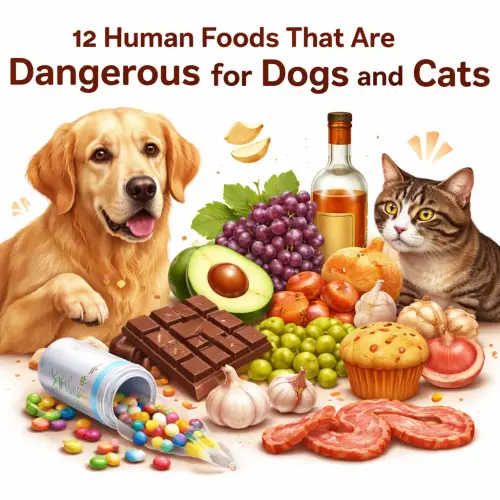
The 12 Human Foods That Are Dangerous for Dogs and Cats
Below is a detailed breakdown of each food, why it is harmful, and what you should watch for if your pet accidentally consumes it.
1. Chocolate – Why It’s a Top Killer
Chocolate is one of the most common foods Dangerous for Dogs and Cats because it contains theobromine and caffeine, compounds pets cannot process efficiently. Even small amounts of chocolate Dangerous for Dogs and Cats can trigger vomiting, diarrhea, rapid heartbeat, tremors, seizures, and potentially death. Dark chocolate and baking chocolate are especially Dangerous for Dogs and Cats due to their higher concentration of toxic compounds. Any chocolate ingestion should be treated as an emergency because chocolate remains one of the leading foods Dangerous for Dogs and Cats.
2. Grapes and Raisins – Small Fruit, Big Danger
Grapes and raisins are surprisingly Dangerous for Dogs and Cats because they can cause sudden kidney failure, even in very small amounts. The exact toxin remains unknown, but these fruits are consistently listed among foods Dangerous for Dogs and Cats by veterinary poison experts. Vomiting, lethargy, loss of appetite, and decreased urination are common signs after exposure to foods Dangerous for Dogs and Cats like grapes and raisins. Immediate veterinary treatment is critical because these foods remain extremely Dangerous for Dogs and Cats even if symptoms are delayed.
3. Onions and Garlic – The Red Cell Threat
Onions, garlic, leeks, and chives are highly Dangerous for Dogs and Cats because they damage red blood cells and can lead to hemolytic anemia. Raw, cooked, or powdered forms are all Dangerous for Dogs and Cats, making many soups, sauces, and seasonings risky for pets. Weakness, pale gums, dark urine, and rapid breathing may appear after consuming foods Dangerous for Dogs and Cats from the onion family. Garlic is especially Dangerous for Dogs and Cats because it is several times more toxic than onions.
4. Xylitol – The Sugar Substitute That’s Not Sweet for Pets
Xylitol is one of the fastest-acting substances Dangerous for Dogs and Cats, especially for dogs. Found in sugar-free gum, candies, peanut butter, and baked goods, xylitol is extremely Dangerous for Dogs and Cats because it can rapidly lower blood sugar and cause liver failure. Vomiting, weakness, seizures, and collapse are emergency symptoms linked to products Dangerous for Dogs and Cats that contain xylitol. Always check ingredient labels carefully because hidden sweeteners can be unexpectedly Dangerous for Dogs and Cats.
5. Macadamia Nuts – A Mystery Toxin
Macadamia nuts are among the lesser-known foods Dangerous for Dogs and Cats, particularly for dogs. Even small amounts can make these nuts Dangerous for Dogs and Cats by causing weakness, tremors, vomiting, and overheating. Symptoms often develop within hours after exposure to foods Dangerous for Dogs and Cats like macadamia nuts. Because the toxin remains poorly understood, veterinarians consider macadamias especially Dangerous for Dogs and Cats and recommend immediate care after ingestion.
6. Alcohol and Yeast Dough – Hidden Hazards
Alcohol and raw yeast dough are extremely Dangerous for Dogs and Cats because they affect the nervous system and digestive tract. Alcohol-containing foods and drinks are highly Dangerous for Dogs and Cats, potentially causing breathing problems, coma, or death. Rising yeast dough is also Dangerous for Dogs and Cats because it expands inside the stomach while producing alcohol during fermentation. Avoiding table scraps with alcohol or raw dough helps reduce exposure to substances Dangerous for Dogs and Cats.
7. Caffeine – From Coffee to Energy Drinks
Caffeine products are highly Dangerous for Dogs and Cats because pets are far more sensitive to stimulants than humans. Coffee, tea bags, energy drinks, and caffeine supplements are all Dangerous for Dogs and Cats and may trigger rapid heart rate, tremors, hyperactivity, or seizures. Small pets are especially vulnerable to products Dangerous for Dogs and Cats that contain concentrated caffeine. Immediate veterinary care is necessary whenever caffeine exposure involves substances Dangerous for Dogs and Cats.
8. Avocado – Persin Concentration
Avocado can be Dangerous for Dogs and Cats because it contains persin, a toxin that may cause vomiting and diarrhea. While some pets tolerate small amounts, avocado remains one of the foods potentially Dangerous for Dogs and Cats, especially for birds and sensitive animals. The pit is also Dangerous for Dogs and Cats because it creates a choking hazard and may cause intestinal blockage. Foods high in fat, including avocado, can become Dangerous for Dogs and Cats by increasing the risk of pancreatitis.
9. Raw Meat and Eggs – Bacterial Risks
Raw meat and eggs are potentially Dangerous for Dogs and Cats because they may contain Salmonella, E. coli, and other harmful bacteria. These bacteria make uncooked foods Dangerous for Dogs and Cats by causing vomiting, diarrhea, dehydration, and severe infections. Raw eggs are also Dangerous for Dogs and Cats because avidin can interfere with biotin absorption and affect skin and coat health. Proper cooking reduces the bacterial risks associated with foods Dangerous for Dogs and Cats.
10. Dairy Products – Not as Safe as You Think
Many dairy products are mildly to moderately Dangerous for Dogs and Cats because most pets cannot properly digest lactose. Milk, ice cream, and creamy foods become Dangerous for Dogs and Cats when they trigger diarrhea, gas, bloating, or stomach pain. Although some pets tolerate small amounts of cheese or yogurt, excessive dairy remains Dangerous for Dogs and Cats with sensitive digestive systems. Avoiding rich dairy products helps reduce exposure to foods Dangerous for Dogs and Cats.
11. Salty Snacks – Sodium Overload
Salty foods are surprisingly Dangerous for Dogs and Cats because too much sodium can affect the brain, kidneys, and nervous system. Chips, pretzels, popcorn, and processed snacks are Dangerous for Dogs and Cats when consumed in large amounts. Excessive thirst, vomiting, tremors, seizures, and weakness are signs linked to snacks Dangerous for Dogs and Cats that contain heavy salt or seasoning. Preventing access to salty table scraps helps avoid foods Dangerous for Dogs and Cats.
12. Cooked Bones – Splinter Risk
Cooked bones are physically Dangerous for Dogs and Cats because they easily splinter into sharp fragments. Poultry bones are especially Dangerous for Dogs and Cats and may puncture the mouth, stomach, or intestines. Choking, internal bleeding, and intestinal blockage are serious complications caused by items Dangerous for Dogs and Cats like brittle cooked bones. Avoid feeding leftover cooked bones because they remain consistently Dangerous for Dogs and Cats even in small pieces.
Foods That Cause Kidney Failure in Pets
Several of the foods listed above — particularly grapes, raisins, and certain toxins — are known to cause acute kidney injury. Foods that cause kidney failure in pets include not only these fruits but also contaminated treats and certain medications. Early signs are subtle: increased thirst, decreased appetite, and lethargy. If you suspect your pet has ingested a nephrotoxin, immediate bloodwork and supportive care can save their life.
Signs Your Pet Ate Something Toxic
The sooner you recognize trouble, the better the outcome. Signs your pet ate something toxic include sudden vomiting or diarrhea, excessive drooling, loss of coordination, tremors, seizures, pale gums, abnormal breathing, or collapse. Cats may hide or become unusually vocal. Do not wait for multiple symptoms to appear — any single sign after a known or suspected ingestion warrants a call to your vet.
Emergency Symptoms After Pets Eat Harmful Foods
Emergency symptoms after pets eat harmful foods include unresponsiveness, difficulty standing, repeated seizures, blue or white gums, and respiratory distress. If your pet shows any of these, it is a life-threatening emergency. Transport them to the nearest veterinary hospital immediately, and bring a sample or packaging of the suspected food if possible.
What to Do If Your Dog or Cat Eats Toxic Food
If you witness or suspect ingestion, follow these steps:
- Stay calm but act quickly. Panic can waste valuable time.
- Identify the substance and amount consumed. Check labels or packaging.
- Call your veterinarian or the Pet Poison Helpline (855-764-7661) immediately. Do not induce vomiting unless directed by a professional — some substances cause more damage when vomited.
- Follow professional advice precisely. They may ask you to bring your pet in or monitor at home.
- Do not give home remedies like milk, salt, or oil. These can complicate treatment.
Knowing what to do if your dog or cat eats toxic food in advance can save minutes that matter. Keep emergency numbers posted on your refrigerator or saved in your phone.
How to Pet Proof Your Kitchen from Dangerous Foods
Prevention is the safest strategy. How to pet proof your kitchen from dangerous foods requires consistent habits:
- Store all food in cabinets or the refrigerator — never leave items on countertops unattended.
- Use childproof locks on lower cabinets if your pet is clever enough to open doors.
- Keep trash cans securely covered or inside a latched cupboard.
- Monitor guests and children who may unknowingly feed pets from the table.
- Educate everyone in the household about common feeding mistakes pet owners make, such as sharing “just a bite” without checking ingredients.
Common Feeding Mistakes Pet Owners Make
Even well-meaning owners fall into these traps. Common feeding mistakes pet owners make include giving table scraps as rewards, assuming “natural” foods are safe, not reading ingredient labels for hidden xylitol or garlic powder, and believing that if a food is safe for dogs it is safe for cats (and vice versa). Cats are obligate carnivores with unique dietary restrictions, while dogs can suffer from many of the same toxins but with different sensitivities.
Safe Alternatives to Human Food for Pets
Instead of risky treats, offer safe alternatives to human food for pets that are nutritionally appropriate and low in calories. For dogs: plain cooked chicken (no skin or bones), baby carrots, green beans, apple slices (no seeds), and plain pumpkin puree are excellent. For cats: small bits of cooked fish, plain turkey, or commercial freeze-dried meat treats work well. Always introduce new foods slowly and in moderation.
When to Call a Vet After Food Poisoning in Pets
Any known ingestion of a toxic food warrants a phone call. When to call a vet after food poisoning in pets includes these scenarios:
- You see your pet eat something on the danger list.
- Symptoms develop within 24 hours of a possible ingestion.
- Your pet is very young, very old, or has a preexisting health condition such as kidney disease.
- You are unsure whether a food is toxic — it is always better to check.
Preventing Accidental Poisoning from Household Foods
Preventing accidental poisoning from household foods starts with awareness and pantry management. Keep a list of toxic foods visible, read all labels of human snacks and baked goods, and never let pets roam the kitchen unsupervised during meal preparation. Consider training your pet to stay out of the kitchen entirely.
Useful Resources
For additional guidance on pet poisoning, these resources provide reliable, veterinarian-reviewed information:
- ASPCA Animal Poison Control Center — 24/7 hotline and extensive list of toxic and non-toxic plants and foods.
- VCA Animal Hospitals – Toxic Food List for Dogs — detailed veterinary information on foods that are dangerous for dogs, including symptoms and treatment.
Conclusion: Keeping Your Pets Safe Starts at Home
The bond between humans and their pets is precious, and sharing food is a natural expression of care. But love means knowing the difference between a safe treat and a serious hazard. The 12 foods listed here are dangerous for dogs and cats, and understanding the risks empowers you to make responsible choices. Prevention — through education, pantry management, and household rules — is the most effective way to avoid a trip to the emergency room. If you suspect your pet has ingested a toxic food, do not hesitate to contact your veterinarian. They are your partner in keeping your furry friend healthy and happy for years to come.
Frequently Asked Questions About Dangerous for Dogs and Cats
What human foods are dangerous for dogs and cats ?
Chocolate, grapes, raisins, onions, garlic, xylitol, macadamia nuts, alcohol, caffeine, avocado, raw meat and eggs, dairy, salty snacks, and cooked bones are the primary dangers.
Can grapes and raisins harm pets ?
Yes, even small amounts can cause acute kidney failure in dogs and cats. Symptoms include vomiting, lethargy, and decreased urination.
Why chocolate is dangerous for dogs and cats ?
Chocolate contains theobromine and caffeine, which pets metabolize slowly, leading to vomiting, seizures, and potentially fatal heart arrhythmias.
What happens if pets eat onions or garlic ?
These foods damage red blood cells, causing hemolytic anemia. Symptoms include weakness, pale gums, and dark urine, often appearing days later.
Are dairy products bad for dogs and cats ?
Most pets are lactose intolerant, and dairy can cause diarrhea, gas, and abdominal discomfort. Avoid milk, ice cream, and cheese in large amounts.
What are xylitol poisoning symptoms in pets ?
Vomiting, weakness, lack of coordination, seizures, and liver failure. Xylitol causes a rapid drop in blood sugar, especially in dogs.
Which dangerous table scraps should pets avoid?
All items on the toxic list — especially fatty meats, bones, seasoned foods, and anything containing onions, garlic, or xylitol.
What foods cause kidney failure in pets?
Grapes, raisins, and certain toxins like ethylene glycol (antifreeze) are well-known for causing acute kidney failure.
What are the signs your pet ate something toxic ?
Vomiting, diarrhea, drooling, lethargy, tremors, seizures, and collapse are common signs. Any unusual behavior after eating warrants attention.
What are emergency symptoms after pets eat harmful foods ?
Unresponsiveness, repeated seizures, difficulty breathing, and blue gums require immediate veterinary care.
What to do if your dog or cat eats toxic food ?
Stay calm, identify the food, call your vet or poison control immediately, and follow their instructions. Do not induce vomiting unless told to.
How to pet proof your kitchen from dangerous foods ?
Store food in sealed containers or cabinets, use trash can locks, supervise mealtime, and educate family members about toxic items.
What are common feeding mistakes pet owners make ?
Sharing table scraps, assuming natural foods are safe, ignoring ingredient labels, and feeding the same foods to dogs and cats without consideration.
What are safe alternatives to human food for pets ?
Plain cooked meats, baby carrots, apple slices (no seeds), green beans, and plain pumpkin are safe for dogs. Small cooked fish or turkey works well for cats.
When to call a vet after food poisoning in pets ?
If you saw your pet eat a toxic food, if symptoms appear within 24 hours, or if your pet is very young, old, or has health issues.
How to prevent accidental poisoning from household foods?
Keep a visible list of toxic foods, read every label, store food securely, and train pets to stay out of the kitchen during meal prep.
Can cats eat the same foods as dogs?
No. Cats are obligate carnivores with different nutritional needs. Many toxic foods affect both species, but some are more severe in one than the other.
Is peanut butter safe for dogs?
Only if it contains no xylitol. Many natural peanut butters are safe in small amounts, but always check the ingredient list.
Can I give my dog bread?
Plain white or wheat bread in small amounts is generally safe, but avoid bread with raisins, garlic, xylitol, or excess sugar.
What should I do if my pet eats chocolate?
Call your vet or poison control immediately. The treatment depends on the type and amount of chocolate consumed and your pet’s weight.